domingo, 6 de junho de 2021

Pinhão: the Brazilian pine nut

Brazilian pine nuts: the pinhões

Pinhão, the seed from the Brazilian Pine, is a cherished food in the country, especially in the south, where it abounds in the mountains and plateaus. It is a synonym for beauty, and also a synonym for home for many of us, who automatically feel welcomed in our homeland when we see its trees, these towering dark green chalices, standing out in the landscape, whether it be green highland pastures or hilly Atlantic Forest country.

(Confira a transcrição do vídeo desta postagem em português e inglês ao fim do texto / check out this post's video transcription in English and Portuguese at the end of the text).

Araucárias in a rural property in São Jorge da Mulada, Caxias do Sul

Even way before the 15th century, when European explorers set foot in what today we call Brazil, the people who inhabited this land already appreciated the Brazilian pine nuts. Research carried out a few years ago by Brazilian and British scientists concluded that indigenous peoples who inhabited the southern Brazilian highlands not only used to consume pinhão, but were also responsible for an expansion of the pine trees - also known as araucárias - that took place more than a thousand years ago in this region.

Today, pinhão is normally eaten alone as a snack, but it can also be mixed with other ingredients in the preparation of dishes like paçoca de pinhão, where it is ground after cooked, mixed with beef or pork mince and seasoned with herbs or spices. Cooked pinhão can also be chopped up and fill pastéis, also preferably with ground meat.

A shelled pinhão after cooked

There are three main ways to prepare Brazilian pine nuts. Check out the video that follows to learn more about this unique tradition, including the spellbinding sapêco do pinhão: the scorching of the pine nut.

Video doesn't show up? Watch here.

Pinhão preparation: Pedro Paulo Mapelli and Isabel Spido Mapelli
Images and editing: Diego Mandarino
Music: https://www.bensound.com

More than a nutritious seed, the pinhão means tradition and coziness. Being a hallmark of the Southern Cone* autumn, when temperatures often drop to nose-chilling levels, it can be found in countless dwellings in the region, on top of lit wood-burning stoves surrounded by curled up family members who cannot wait for the roasting pinhões to be ready.

Pinhões being roasted on top of a wood-burning stove

The long-established sapêco (scorching) of the pinhão

*Southern Cone: South American region encompassing the four southernmost Brazilian states (São Paulo, Paraná, Santa Catarina and Rio Grande do Sul) plus Paraguay, Uruguay, Argentina and Chile - no araucárias like the Brazilian ones are to be found in the latter though; Chile is home to araucanas, which are also found in Argentina. 


Transcrição do vídeo / video transcription


DIEGO: Very, very hot.

DIEGO: Muito, muito quente.


DIEGO: Hello there, folks! Behold, the Brazilian Pinhão! Or pine nut. It comes from the Brazilian Pine Tree, which is native to southern Brazil and certain high parts of southeastern Brazil.

DIEGO: Oi, pessoal! Contemplem: o Pinhão brasileiro! Ou "pine nut". Ele vem do Pinheiro Brasileiro, que é nativo da região Sul do Brasil e algumas partes altas da região Sudeste do Brasil.


CAPTION: Pinhões are savory and must be cooked.

LEGENDA: Pinhões são salgados ("não-doces") e devem ser cozidos.


DIEGO: So, there is this flat part here at one end, and then it's plumpy on this part. And at the other end, you can see that it's tapered. And we're interested in what is inside this brown case. 

DIEGO: Então, há essa parte chata aqui em uma das extremidades, e aí ele é gordinho nesta parte. E, na outra extremidade, você pode ver que ele é afinado. E a gente está interessado no que está dentro desta casca marrom. 


CAPTION: Pinhão is rich in calories, fiber and potassium.

LEGENDA: O pinhão é rico em calorias, fibras e potássio.


DIEGO: I can further open the case with my teeth. So I just have to bite the pine nut at that plumpy end, and make the pine nut inside slide out of the casing.

DIEGO: Eu posso também abrir a casca com os dentes. Aí eu só tenho que morder o pinhão naquela extremidade gordinha, e fazer o pinhão que está dentro deslizar para fora do envoltório.


DIEGO: Now, let's take a look at the Brazilian pine tree, where these guys come from. So you can come with me over here...

DIEGO: Agora, vamos dar uma olhada no pinheiro-brasileiro, de onde esses caras vêm. Então pode vir comigo por aqui...


CAPTION: These pine trees are also known as "araucárias".

LEGENDA: Esses pinheiros também são conhecidos como "araucárias".


DIEGO: ...and this is our east-facing window. This is a typical autumn Saturday morning in Brazil, sunny... in southern Brazil, I mean. Sunny... and those are the Brazilian pine trees, very common here...

DIEGO: ...e esta é a nossa janela voltada para o leste. Essa é uma típica manhã de sábado de outono no Brasil, ensolarada... no sul do Brasil, eu digo. Ensolarada... e aqueles são os pinheiros-brasileiros, muito comuns aqui...


DIEGO: And this is our north-facing window...

DIEGO: E esta é a nossa janela voltada para o norte...


CAPTION: They are also native to parts of Argentina, Paraguay and Uruguay.

LEGENDA: Eles também são nativos de partes da Argentina, Paraguai e Uruguai.


DIEGO: ...there is downtown Caxias do Sul, over there, as you can see... you can spot more Brazilian pine trees over there, by the church.

DIEGO: ...lá está o centro de Caxias do Sul, lá adiante, como você pode ver... você pode avistar mais pinheiros-brasileiros ali adiante, junto à igreja.


CAPTION: Araucárias are also called candelabra due to their shape.

LEGENDA: Araucárias também são chamadas "candelabros" devido à sua forma.


CAPTION: Paraná pine is still another name.

LEGENDA: Pinheiro do Paraná ou pinheiro-do-paraná é ainda um outro nome.


DIEGO: So, you can prepare the pinhões - the Brazilian pine nuts - in a number of ways, and you can find them in a number of dishes.

DIEGO: Então, você pode preparar os pinhões - os "pine nuts" brasileiros - de uma série de formas, e você pode encontrá-los em uma série de pratos.


CAPTION: Dishes with pinhão include PAÇOCA, where it is ground and mixed with minced meat (pork or beef) and spices.

LEGENDA: Pratos com pinhão incluem a PAÇOCA, onde ele é moído e misturado com carne moída (porco ou gado) e temperos.


DIEGO: So, the main ways to prepare pinhões are: you can cook them under pressure; you can roast them on a hot plate (for example, a griddle - but, traditionally, this is done here in the south of Brazil by placing the pinhões on top of wood-burning stoves, so you roast them); and you can also scorch them, so you roast them directly on fire, and you litteraly let them scorch. And this is in fact the most traditional way to prepare pinhões here in the south. So people light the sprigs of the very Brazilian pine tree on fire, and with that fire they scorch the pine nuts.

DIEGO: Bom, as formas principais de se fazer pinhão são: você pode cozinhá-los na pressão; você pode tostá-los em uma chapa quente (por exemplo, um grelhador de chapa - mas, tradicionalmente, isso é feito aqui no sul do Brasil colocando os pinhões em cima de fogões a lenha, e aí você tosta eles); e você pode também chamuscá-los ou sapecá-los, então você tosta eles diretamente no fogo, e você literalmente deixa eles chamuscarem ou sapecarem. E esse é na verdade o jeito mais tradicional de fazer pinhões aqui na região Sul. Então as pessoas colocam fogo nos ramos, ou grinfas, do próprio pinheiro-brasileiro e com esse fogo elas sapecam os pinhões.


CAPTION: Araucárias are nowadays critically endangered, mainly due to logging and farming expansion in the past century.

LEGENDA: Araucárias estão hoje em dia em perigo crítico de extinção, principalmente devido à derrubada para madeira e à expansão da agricultura no século passado.


CAPTION: Pinhões can be collected from the ground around the pines.

LEGENDA: Os pinhões podem ser catados do chão em volta dos pinheiros.


DIEGO: Now, look at the size of that tree, the Brazilian pine tree... this is tens of meters tall. And by its base, on the ground around it, you can find /(...)/ empty shells, because there are some animals that also feed on these Brazilian pine nuts; as you can see, there are tons of pine tree sprigs on the ground that we're gonna be using to make the fire.

DIEGO: Olha só o tamanho dessa árvore, o pinheiro-brasileiro... isso são dezenas de metros de altura. E pela base dele, no chão em volta dele, você encontra /(...)/ cascas vazias, porque há alguns animais que também se alimentam desses pinhões brasileiros; como você pode ver, tem um monte de grinfas no chão, que a gente vai usar para fazer o fogo.


CAPTION: We first set a layer of sprigs and spread some pine nuts on top. 

LEGENDA: A gente primeiro coloca uma camada de grinfa e espalha alguns pinhões por cima.


CAPTION: We then add some more sprigs, pine nuts, and keep repeating the process...

LEGENDA: A gente então coloca mais algumas grinfas, pinhões, e segue repetindo o processo...


CAPTION: The araucária sprig is called "grinfa" or "grimpa" here in the south.

LEGENDA: O ramo de araucária é chamado "grinfa" ou "grimpa" aqui na região Sul.


CAPTION: A fire is lit at the base of the heap.

LEGENDA: O fogo é aceso na base do monte.


CAPTION: A fairly tall heap produces a tall flame...

LEGENDA: Um monte razoavelmente alto produz uma chama alta...


CAPTION: ...which is ideal for roasting the pinhões.

LEGENDA: ...que é ideal para assar os pinhões.


ISABEL: "Can you hear the pinhões pop?"

ISABEL: Tá ouvindo o barulhinho dos pinhões,  lá ó?


DIEGO: Mhm... They're starting to pop.

DIEGO: Mhm... Eles tão começando a estourar.


CAPTION: This preparation method is called "sapêco" (scorching).

LEGENDA: Esse método de preparo é chamado "sapêco" (chamusco).


ISABEL: "You can take it and eat it if you want."

ISABEL: Ó, pode pegar ele pra comer, se tu quiser.


CAPTION: This is my first time eating pinhão prepared in this way...

LEGENDA: Esse é a primeira vez que eu estou comendo pinhão feito desse jeito...


DIEGO: Very, very hot.

DIEGO: Muito, muito quente.


DIEGO: Mmm... hmmmm! Hm-hmmmmmm!!! Very good! It's crunchy! ("It is crunchy!").

DIEGO: Mmm... hmmmm! Hm-hmmmmmm!!! Muito bom! Tá crocante! (Ele tá crocante!).


ISABEL: "It is different."

ISABEL: Ele é diferente.


DIEGO: Mhm. Tastes better than the one we cook under pressure. Definitely. That's why this is the traditional way to prepare it! Now I know.

DIEGO: Mhm. É melhor que o que a gente faz na pressão. Sem dúvida. É por isso que esse é o jeito tradicional de fazer ele! Agora eu sei.


DIEGO: "It comes out really tastsy."

DIEGO: Ele fica bem gostoso.


ISABEL: "It comes out different!"

ISABEL: Ele fica diferente!


DIEGO: So tasty, crunchy...

DIEGO: Tão gostoso, crocante...


CAPTION: The pine nut season is in fall, when temperatures start to drop from an average of 20ºC in late summer to as low as around 5°C, or even lower.

LEGENDA: A temporada do pinhão é no outono, quando as temperaturas começam a cair de uma média de 20ºC no fim do verão para mínimas de até 5ºC, ou até menos.


CAPTION: Pinhão is thus often associated with coziness in chilly days...

LEGENDA: O pinhão é, portanto, frequentemente associado a aconchego em dias frios...


CAPTION: ...specially when it is prepared on a wood burning stove...

LEGENDA: ...especialmente quando ele é preparado na chapa de um fogão a lenha...


CAPTION: ...which warms up the house.

LEGENDA: ...que aquece a casa.


CAPTION: Finally, you can alternatively cook them in water...

LEGENDA: Por fim, você também pode cozinhá-los na água...


DIEGO: Now I'm gonna put the pine nuts, the pinhões, in the pressure cooker...

DIEGO: Agora eu vou colocar os "pine nuts", os pinhões, na panela de pressão...


CAPTION: I add enough water so that they cook under pressure for at least 40 minutes.

LEGENDA: Eu adiciono água suficiente para que eles cozinhem na pressão por pelo menos 40 minutos.


CAPTION: When the shell cracks, the pinhão is ready to be eaten.

LEGENDA: Quando a casca se rompe, o pinhão está pronto.


CAPTION: When cooked in water, it remains soft and somewhat flexible.

LEGENDA: Quando cozido na água, ele fica macio e um pouco flexível.


CAPTION: Pinhão can also be eaten as a pastel filling.

LEGENDA: O pinhão também pode ser comido como um recheio de pastel.


CAPTION: It tastes better when combined with ground meat!

LEGENDA: Ele fica melhor quando combinado com carne moída!


MESSAGE: Thanks for watching!

MENSAGEM: Obrigado por assistir!


SOURCES

Revista Piauí Online: O POVO QUE FEZ DO PINHÃO UMA FLORESTA. Available at https://piaui.folha.uol.com.br/o-povo-que-fez-do-pinhao-uma-floresta/

The Conversation. Climate breakdown is pushing Brazil’s iconic Araucaria tree to extinction – new research - Oliver Wilson. Available at https://theconversation.com/climate-breakdown-is-pushing-brazils-iconic-araucaria-tree-to-extinction-new-research-123068

Araucaria Angustifolia. Wikipedia English. Available at https://en.wikipedia.org/wiki/Araucaria_angustifolia

Araucária. Wikipédia em português. Available at https://pt.wikipedia.org/wiki/Arauc%C3%A1ria

Flora de Uruguay. Wikiwand. Available at https://www.wikiwand.com/es/Flora_de_Uruguay

Southern Cone. Wikipedia English. Available at https://en.wikipedia.org/wiki/Southern_Cone

Global Trees Campaign. Paraná Pine. Available at https://globaltrees.org/threatened-trees/trees/parana-pine/


terça-feira, 4 de maio de 2021

Brazilian Pastel - golden brown and crunchy


The pastel is a typical turnover pastry in Brazil, traditionally savory, and usually eaten as a snack. This popular dish can be found anywhere in the country, from convenience stores to bakeries, cafes and even specialized restaurants.

(Pictures: Diego Mandarino) 

Check out the video below to learn more about the Brazilian pastel. At the end of the text you will find my recipe for the ground beef I fill baked pastéis with.

                                                    Video doesn't show up? Watch here.
Pastel preparation: Isabel Spido Mapelli and Diego Mandarino
Images and editing: Diego Mandarino
Music: https://www.bensound.com

Many people in the country say that the perfect accompaniment for pastel is the sugarcane juice (caldo de cana), a beverage suited specially for hot weather - the sweet juice from a freshly pressed cane in a glass with ice cubes is a soothing balm on the oppresive, sultry days of summer. But its combination with pastel is generally regarded as a fine snack all year round throughout Brazil. 

To me, pastel is an awesome dish, no matter where, no matter what season or time of the day it is. On the cold, wintry days here in the south of the country, it is particularly great with soup for lunch or dinner, and also between meals with a cup of coffee, tea or even hot chocolate. 


Pastel to take away or dine in


I can think of at least two shops here in my neighborhood in Caxias do Sul that sell pastel fried on the spot. You will often find pastéis in display counters at bakeries, snack bars and cafes; they are usually very good, though not as good as if they had been fried at the moment. 

However, be mindful that, in some cases, the fried pastel might have been sitting in these counters for hours, so its pastry has probably become a little rubbery. It is a good idea to ask the attendant how long ago the pastel was fried. Otherwise, the only way to know its quality is by having one; most places care for their reputation, whether they are big or small, fancy or humble. But there are always those that do not offer a good standard of food.


Half-moon-shaped or rectangular


In general, pastéis that are sold at food shops, markets and restaurants are of a larger size than the usual homemade pastel, and sometimes of a rectangular shape rather than a semicircle. The round piece of dough for the latter is usually a little over 10 centimeters in diameter, while the former is typically at least 15 centimeters in length after folded. Some places, commonly pubs and bars, serve tiny pastéis (pasteizinhos) in portions. At birthday parties, people in Brazil use to serve nibble-sized pasteizinhos of no more than 3 cm, which are placed in a tray that customarily rests on a table for the guests to help themselves.


Flavors


Ground beef and heart of palm with cheese fillings
At pastelarias - stores specialized in serving pastéis - you can find a wide variety of fillings. Here are the most traditional ones that I can recall:
- Ground beef (commonly with pieces of boiled eggs and sometimes olives)
- Cheese
- Shredded chicken (sometimes with corn)
- Heart of palm (often with cheese)
- Shrimps
- Codfish
- Corn (often with cheese)
- Guava paste with cheese (a sweet combination popularly known as "Romeo and Juliet")


Ground beef filling for baked pastéis

This is my recipe for the ground beef filling. You will need:

- BEEF: Approximately 500g of minced beef
- ONION: One small or medium-sized onion
- GARLIC: 4 or 5 cloves of garlic
- BUTTER: A soup spoon of butter
- SALT
- TOMATOES: 3 or 4 tomatoes
- EGG: 1 or 2 eggs
- PAPRIKA: Sweet paprika
- BASIL: A handful of dried basil leaves

(Note: these amounts are enough to make two dozens of pastéis, using approximately 500g of dough)

Chop up the onion, the garlic and the tomatoes. In a wok or saucepan, put the butter and add a few pinches of salt. Start sautéing the onion and add the garlic a little later so that it doesn't overcook. You then put in the beef and try to sear most of it before adding the tomato pieces. After you put in the tomato, boil the egg or eggs for 3 minutes in a separate pot, remove their shells and add them to the mix, cutting them into pieces with a knife. 
While letting the water released by the ingredients reduce, sprinkle the sweet paprika over the surface of the beef and add a handful of dried basil leaves. Taste the mix and adjust the salt as needed. Stir if necessary and, when there is only little water left, turn off the burner. It is important that the mixture remains moisty, as it will be afterwards heated in the oven, inside the pastel dough.
(Check out how I bake the pastéis in the video above).

Baked pastéis that have just come out of the oven

Homemade pastéis to be fried in a skillet


Check out these other contents:


domingo, 18 de abril de 2021

Caxias do Sul - RS, Brazil: The Pearl of the Colonies

Caxias do Sul is the second largest city in the state of Rio Grande do Sul after Porto Alegre, the state's capital
Photo: Diego Mandarino

I live in Caxias do Sul, an industrial hub in the mountains in the south of Brazil. Although it is a prosperous city with half a million inhabitants, the “Pearl of the Colonies”, as it is also known, keeps many features of the quiet countryside village it once was. Its roots as a rural settlement (a colony) of Italian migrants in Brazil in the last quarter of the 19th century are still strongly felt in today's culture and habits of its population.

For example, many people have lunch at home instead of eating in a restaurant near their workplace or taking a lunchbox to work*. As a consequence, rush hours in Caxias include not only the usual morning and evening hours, when most people commute, but also the period at the end of the morning and beginning of the afternoon. Another example is that, even though the city does have a thriving downtown commercial area with many trendy stores, restaurants, and pubs, it all gets surprisingly dead on Sundays, to such an extent that it looks like an old-western town in the United States, with a ball of hay rolling on the main street. Not much cultural activity takes place here – that is, in the urban area; religious feasts and balls happen at different times of the year in rural communities in the municipality of Caxias do Sul, but those are usually meant for community members themselves and invited friends, not the general public.

Raffle during a rural community feast in Caxias do Sul
Photo: Diego Mandarino 

In fact, urban Caxias seems to be all about daytime, weekday business: it is essentially a Monday-to-Friday city (and arguably Saturday, when shops in town are open as well). Differently from other towns and villages in this region of mountain ranges, tourists in Caxias do Sul are typically industrial executives traveling for business, trying to strike good deals during their stay. Hotel occupancy is high from Monday to Friday, but laughable on weekends. That is even odder considering that traditional leisure tourism flourishes in towns close by, for the region is a major wine producer and its magnificent landscapes and cuisine attract countless visitors.


Superb food  


Caxias do Sul is, nonetheless, a vibrant city during weekdays, with high-quality restaurants, some of which bring about very localized activity - also on Saturdays and Sundays at lunchtime, amidst an awkwardly “sleepy” urban territory, with its tall buildings and wide, empty streets. Caxias is an outstanding destination if you enjoy eating out, so much so that some domestic tourists come from Porto Alegre – the state’s capital – and surroundings by car to have lunch in Caxiense eateries after a two-hour drive with a few enjoyable scenic features.

In this regard, much of the city’s strength lies in the Italian settlers' cuisine, which is marked by a variety of pastas and roasted chicken, and the Gaucho churrasco from Rio Grande do Sul. Other less-known specialties include a particular style of “xis” (pronounced like “sheeze”), a regional word used in the state of Rio Grande do Sul that comes from the English “cheese” and is an abbreviation of “xisburguer”, meaning a sandwich with hamburger and cheese (cheeseburger); and the local “bauru”, which, unlike the homonymous sandwich found throughout Brazil, is a dish that consists of beef steaks covered with slices of ham, cheese and tomato sauce, with rice and mayonnaise potato salad served on the side.

A wider diversity of cooking styles would be welcome, though. In any case, a handful of assorted ethnic restaurants have been established in town lately, and more will hopefully keep joining this promising colorful scene. 
A kiwifruit vineyard in Caxias do Sul
Photo: Diego Mandarino


As I mentioned at the beginning, Caxias do Sul is an industrial city, but agriculture has remained strong in the municipality since the early European settlers. The main crop is grape, as the region is a strong wine producer - the Grape Festival (Festa da Uva), usually held every two years during the harvest period, is the city’s only major tourist event. But Caxias is also important in the production of fruits and vegetables in general.


The Palanquinhos Canyon in the Caxiense country landscape
Photo: Suelen Mapelli


A charming soul...  


Despite the urbanization process that started a little over a hundred years ago, Caxias do Sul has kept its rural, colonial soul across several generations. And this is where liveliness, however not in urban’s terms, is still to be found to this day, along with stunning scenery. Just like João do Rio’s “charming soul of the streets” in early 20th century Rio de Janeiro, the Pearl of the Colonies also possesses a charming soul, but in its rural environment.

If you are a regular tourist in Rio Grande do Sul, you might rather want to visit other towns here in the Serra Gaúcha (the Gaucho mountains) region, which are more tourism driven. But if you search for a different experience, you might want to venture in the Caxiense scene. By car, preferably, so you can explore the innumerous country roads.

Interestingly enough, I think I would not have been able to make the most of what Caxias do Sul can offer had I not come to settle here (I am from a different Gaucho region myself). I think it is by truly becoming one with the locals that I have been able to experience some of the place’s unique attractions.

Church of the Rocca, on a Caxias rural mountaintop
Photo: Diego Mandarino

*Cultural note:
in Brazil, the main meal is usually lunch, not dinner as it is in many other countries. We do not have just a sandwich and fruit around noon; we always sit at the table to eat, on a plate, foods like rice and beans, meat, potatoes, salad, oftentimes pasta, and so on. In some families, lunch and dinner are equally important. Lunch is always a big meal in Brazil.


quinta-feira, 8 de abril de 2021

♫ Gumdrops keep sweetening my head ♫

Following the Easter celebrations, zillions of homes in the world are flooded with sugary treats brought by the bunny. While many people are now filled with guilt for binge eating chocolate, I invite you to go a different way. Instead of consuming yourself with worry about your body shape, let us dwell for a few moments in yet another sweet childhood memory in this blog: gumdrops.

Here in Rio Grande do Sul, Brazil, we call them balas de goma (literally: gum candies). In other parts of the country, they are called jujubas.

Strawberry, lemon, pineapple and tangerine-flavored gumdrops
Photo: Diego Mandarino 

I had the opportunity to meet these colorful sugar gems once again this Easter, after a long while. So much time had passed that I had grown doubtful about the quality of gumdrops, thinking it might have been a childhood passion that would not persist in adult life.

But... how surprised I was a few days ago when I chewed the first one from a small bag of ten. All of a sudden, my sugar-coated memories proved to be consistent enough, for the taste of the slightly sticky pellet brought those elusive sensorial remembrances back to life as it massaged all the areas inside my mouth and its aroma hit my tasting nerves.

The first thing I have always liked about gumdrops is that their colors are not random, but each one indicates a specific flavor. The second important aspect for me about them is that these candies are indeed fruit-flavored; our taste buds can feel the strawberry signature in the red drop,  the lemon trademark in the green drop, and so on. They are not bland at all, as is sometimes the case with other sweets. No; gumdrops have distinctive savors.

I like all gumdrops, but the pineapple one strikes a special chord. It's often the yellow one in a pack. The orange one, tangerine-flavored, is also special. 

What about you? Do you like gumdrops? How are they called where you come from? Do you have a favorite flavor? 

domingo, 28 de fevereiro de 2021

What a nice smell! The Gaucho churrasco!

It's roasted meat over charcoal fire in an open brick oven. But this laconic definition is far from saying all that "churrasco* gaúcho" represents. 

Gaucho churrasco is actually an institution in the Brazilian southernmost state, Rio Grande do Sul. By institution I mean a set of spontaneous cultural practices surrounding the meal: family and friends gathering together on Sundays, a certain ritual related to its planning and preparation, birthday celebrations, fundraising events, religious feasts, specialized restaurants, football (soccer) matchdays, and much more.

Read on to learn more about this tradition. Check out the video below to see how a typical Sunday family churrasco is prepared:

Video doesn't show up? Watch here.

Churrasqueiro: Tasso Grivot Mandarino
Images and editing: Diego Mandarino
Music: https://www.bensound.com


IT GOES A LITTLE BIT LIKE THIS:


In a house garage on a sunny Sunday morning, family members sit on chairs in a circle or U-shaped row**. They chat about family matters and life in general, tell anecdotes, gossip, tell jokes, comment the latest and upcoming football (soccer) matches and telenovela episodes, sometimes discuss current affairs and politics (which often becomes disagreeable, mainly because of someone's condescending or radical attitude), and talk about various trivialities. 

Churrasco is traditionally served directly from the skewer
All the while, when there is no pandemic, they may pass around a drink known as chimarrão (hot and slightly bitter water with yerba mate in a "cuia", a cup made out of the shell of a dried "porongo", a type of gourd) and/or a large glass of "caipirinha" (a drink containing Brazilian distilled spirit - "cachaça" - lemon pieces, some sugar and a lot of ice cubes). At some point, a delicious, mouthwatering smoky smell joins the conversation and heightens the anticipation about the forthcoming meal, as the meat starts to roast. 

Fortunately to me, most of these gatherings have been agreeable in my life. I see them as very nice opportunities to chill out, eat good food, catch up with family and friends and have a wonderful time, especially when there are kids around playing and enjoying themselves. But I understand that this might not be the case for everybody.

Rump tail beef covered with coarse salt
In a typical gathering, the homeowner - the host - stands by a small table, piercing large pieces of meat on a number of long metal skewers. They carefully spread coarse (crystallized) salt on the surface of the meat chunks. They then start the fire in the open brick oven in the garage wall, a built-in masonry structure with its own chimney. It is similar in concept to a fireplace, but is higher up the ground so as to be operated by someone standing. Its "hearth", or bottom inside, is lower than the wall opening, so the heat is kept in. This wall oven is called "churrasqueira"***.

The car or cars usually kept in the garage have been parked out in the yard - if there is enough room - or  on the street. There may or may not be music being played by the speakers of such cars or in the house. Some families might be unmindful of their music volume and disturb neighbors. Most of them are very respectful, though.

Beef and chicken in the "churrasqueira"
The first meat to be ready is usually the "salsichão", a particular kind of sausage (a stout one,  usually made of pork, but sometimes also chicken). The sausages are commonly served as appetizers; they are sliced and passed around on a tray or plate, often with cassava flour or farofa, so that each guest can have one or a few small pieces. Similarly, chicken hearts are passed around as finger food appetizers. 

Next, when the beef cuts - which are the main meat - get close to being ready, the guests are invited to sit at a long trestle table**. On the table, plates containing salads and cassava flour or farofa  are usually laid, as well as soft drinks and beer. The host, or hosts, start taking each skewer from the oven at a time and they either serve each guest by walking around the table or put the meat on a tray and pass it around. Apart from beef, which is always the main and most expected dish, other meats are sometimes present, including chicken thighs, drumsticks and wings, pork cuts, less often lamb and, much less often, rabbit meat, boar meat and others.


CHURRASCARIA: a common type of restaurant


This Gaucho meal has gained reputation over time throughout the country, which brought about a particular kind of restaurant in Brazil: the "churrascaria". It is a very popular, widespread type of eatery. 

Charcoal fire burning in the churrasqueira
Churrascarias can be found in big cities, small towns and are common roadside restaurants, which makes them a favorite with truck drivers who travel across Brazil. They usually adopt the "rodízio" (rotation) system: several waiters walking around the restaurant from table to table with a piece of meat on a skewer supported by a tray, and a knife; they offer a piece of the meat they are carrying to each customer at each table, until they have passed at all tables or the meat they are carrying has run out, in which case they go back to the kitchen to bring more meat on a skewer. 

Speaking of the meal as a gathering of family and friends, in other Brazilian regions the churrasco preparation techniques and meeting styles change to a certain extent. It is, nonetheless, a national meal. But then again, the Gaucho churrasco as I know it is the one I described above.


A REGIONAL VOCATION: a little bit of history


It is no surprise that such a meal has come about in this part of Brazil. Beef cattle farming ("pecuária" in Portuguese) has been practiced on a large scale in this region for centuries. In the 17th century, Jesuit priests (the same religious order to which Argentine pope Francis belongs) brought cattle to Rio Grande do Sul in large amounts from other parts of South America****. The livestock in the continent is descended from head of cattle brought from Europe in the 16th century.

The cattle spread out in Rio Grande do Sul and Uruguay. Millions of animals became wild at the time; Brazilian indigenous natives used to hunt them for food. It was not until the 18th century that cattle started to be farmed on a large scale in the state****. 

Medium rare churrasco beef
The prairies in a vast portion of the Rio Grande do Sul territory (known as the "pampas") are very suitable for cattle farming and also explain why the practice has prospered. The same goes for the territory of Uruguay and Argentina. Speaking of these two neighbors, each has also developed its own beef roasting method, called "parrilla". My wife and I have recently tried the one from Uruguay, which is astoundingly good! Unlike our churrasco, the Uruguayan method uses firewood to fuel the roasting fire, which results in a different, very pleasant aroma.

In Rio Grande do Sul, apart from the pampas, there is a huge plateau with fields on top of the mountain ranges, not far from the Atlantic Ocean and extending to the neighboring state of Santa Catarina, where cattle farming has been going on for a long time. In this region, they make excellent "Serrano" cheese from the milk of beef breeds*****


PLANNING FOR CHURRASCO


The planning part is really interesting about the meal.
Cassava flour and potato salad are traditional accompaniments

With the number of guests in mind,  the host goes shopping for the items they need: sacks of charcoal, the meat itself, coarse salt and accompaniments, like cassava flour, sometimes garlic bread, onions, and so on. 

For some "churrasqueiros", the quality of the charcoal plays a key role, and they stick to the same brand. Another thing is the quality of the meat; the place where one buys it might also make a difference. Plus, depending on the number of people and the nature of the event, the host may choose to buy more expensive or less expensive beef cuts; but they have to be careful, since cheaper options can negatively affect the outcome of the churrasco.


A SOCIAL EVENT


To sum it all up, churrasco is essentially a social event (with very good food, obviously!). Even when it is prepared in a household without having family and friends over, it makes neighbors jealous 😅 All they can do is smell that delicious aroma. As usual, it works like this: one day you are the jealous neighbor, the next day you are the one being envied 😉

The fire dies out, leaving just the embers


Notes:


*Churrasco is pronounced like "shoohasco", with the "oo" as in "food", the "a" as in "star" and the stress falling on the second syllable (shoo.HAS.co).

*I opted to use the term churrasco without translation. I would rather not call it a barbecue, since the latter is not prepared in a masonry oven and the meat is placed on a grill; this is not the case with churrasco.

*Gaúcho is how we call people from the state of Rio Grande do Sul. The term gaucho also applies to South American cowboys who live in the pampas.

**Or at a rectangular table consisting of a pair of wooden planks laid on a couple of removable wooden trestles at each end. That is, a trestle table.  


***The fire on the bottom of this large masonry stove is fueled by pieces of charcoal. These are sold in sacks of usually three to five kilos each in the supermarkets. 

Churrasqueira is a masonry, usually built-in oven
After the initial black smoke dies out, the host (who is preparing the churrasco) places the tip of each skewer in a small cavity in the back of the churrasqueira and rests their grips or handles on horizontally placed bars on the oven's opening. All the "churrasqueiro" (as the person who is preparing the churrasco is often called) needs to do from this point on is to make sure that the meat doesn't burn and that it roasts evenly, turning the skewers every now and then and sometimes placing the meat farther from, or closer to, the fire. In addition, they must be able to tell when the meat is ready and check its doneness in order to serve the guests according to how each person likes their meat: rare, medium or well-done.

In the fields of the countryside, churrasco is traditionally prepared over a firepit dug in the ground ("fogo de chão" or "ground fire"), not in a brick oven. The latter is an adaptation that has become the mainstream method, especially in the urban setting.

****SOURCE: SAGRILO, Lauro Pereira Zago. Origem e evolução da pecuária de corte no Rio Grande do Sul. Trabalho de Conclusão de Curso. UFRGS, 2015. Available at https://www.lume.ufrgs.br/handle/10183/127079

*****SOURCE: Conheça as diferenças entre os queijos colonial e serrano. GZH Campo e Lavoura, 2018. Available at https://gauchazh.clicrbs.com.br/economia/campo-e-lavoura/noticia/2018/02/conheca-as-diferencas-entre-os-queijos-colonial-e-serrano-cjdpvdf9c024n01rv67k7xqz2.html


domingo, 14 de fevereiro de 2021

Cassava (aipim): a South American root

A South American root with multiple names: meet the aipim (aka yuca, cassava, manioc, mandioca in a part of Brazil, macaxeira in another part of Brazil, agbeli in a part of Africa). 


In Southern Brazil, we call it aipim. It is pronounced as something like "ipeen" with the 'n' said almost as in 'ing' words in English, the 'i' as in 'kite', the 'ee' as in 'sleep', and the stress falling on the second syllable. Aipim ≈ "ipeen". 

Whatever the name, this all-purpose tuber, which has a brown skin and is white inside, can be compared to the potato in usefulness in the kitchen. Both are extensively used in Brazil. 

To my taste, foods in general made from cassava, whether savory or sweet, are better than their potato counterparts. The exceptions are few, like crispy roast potatoes. This is far from unanimous, however; to many people, potato dishes taste better. 

Unlike the potato, though, yuca must be thoroughly cooked before it is used in recipes in general. Check out the video below to see how this is done:

 Video doesn't show up? Watch here. 
Images: Suelen Mapelli
Presentation/Editing: Diego Mandarino


Here is a list of food items made out of manioc and some pictures below:

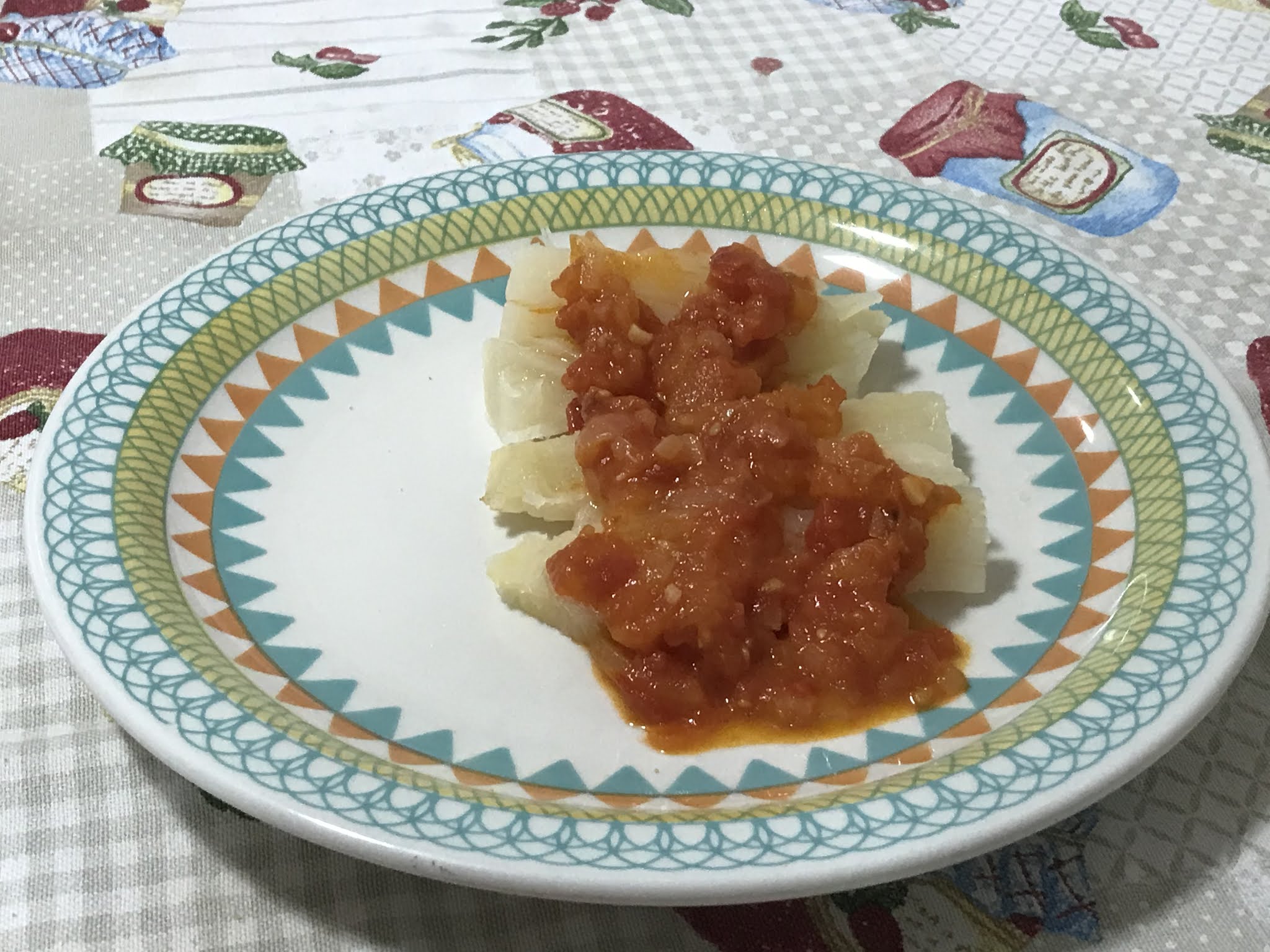
- Cooked aipim
- Fried aipim chunks
- Yuca chips
- Matchstick/shoestring yuca fries
- Mashed cassava
- Toasted cassava flour
- Fried cassava flour (farofa)
- Tapioca
- Manioc bread
- Manioc cake
- Aipim "cuca" (Brazilian crumb cake loaf)


Photos: Diego Mandarino


sábado, 23 de janeiro de 2021

Milk sweet: a spread that tastes like home

Doce de leite. Such a Latin American flavor. It is one of the things I missed from home on the occasions I traveled overseas and was away for some time. 

In Spanish-speaking countries, it is called dulce de leche, just like in Portuguese: 'sweet of milk', 'milk sweet', or something of the sort. Since there is apparently no specific term in English, I will keep using doce de leite. 

It is basically a thick, creamy brown spread. It is delicious on a slice of bread, especially if you mix it with milk cream spread (nata), which is also commonly found in small containers on refrigerated supermarket shelves all over the country.

It tastes perfect on a slice of bread

Doce de leite is a great filling, too. It is the heart of the unrivaled South American alfajor, a most traditional confection in Argentina and Uruguay. It is the soul of the Brazilian churros, a deep-fried, tube-like dough.

This very sweet brown cream also goes heavenly with cheese; in the Brazilian state of Minas Gerais, doce de leite served with Minas cheese is a classic. The sweet commonly found there is of a lighter brown color than the one typically made here in Southern Brazil and neighboring countries.

Speaking of Minas Gerais, another specialty of theirs that makes a perfect companion to milk sweet is pão de queijo, or cheese bread. Pão de queijo is an authentic Brazilian dainty on its own, by the way, popularly accompanied by a cup of coffee in city cafes, bus stations, roadside gas stations and diners, and airports throughout the country.

In the pictures below, the doce de leite, Minas cheese and cheese bread were all made in the state of Rio Grande do Sul:

Minas Cheese and Milk Sweet: what a couple!

Pão de queijo and doce de leite, another scrumptious duo.

Oh, how I miss those good old days when I was a child in the 90's and it was still possible to find doce de leite and nata in bulk in supermarkets' display counters to be sold by weight. You could ask for a certain quantity and the attendant behind the counter would start collecting spoons of the desired substance, gradually filling a plastic container that stood on a scale until the approximate requested amount was reached. It seems to me that these foods tasted better that way. They don't sell them like that anymore due to sanitary regulations. 

The recipe for this brown manjar is quite simple; the making of it, not so much. The sweet is obtained by slowly heating milk with sugar. One has to be careful not to let it burn, stirring and stirring. According to my mother-in-law's account, who had the experience of preparing it at home in the past, the process takes hours and the resulting volume of sweet is a great deal smaller than the initial volume of milk. 

In Brazil, you can usually find jars containing doce de leite in supermarkets. The best brands are usually from Uruguay. When my wife and I traveled there last year, a little more than a month before the pandemic, we were surprised by the variety of products made with, or flavored like, doce de leite, including ice creams, yogurts and carton drinks.

You can also find it in small plastic bags here in Brazil. This is popular with kids, who bite these bags open and slurp its scrummy content. My wife got one in a food basket she was gifted by a group of students last year, which reminded her of childhood.

Do you feel like biting this bag open?

In South America, I can assure you that doce de leite is a superior sweet and a flavor to try, and one to never forget.