Mostrando postagens com marcador food. Mostrar todas as postagens

sexta-feira, 24 de dezembro de 2021

Christmas in Brazil

A Nativity Scene in the Novo Hamburgo Cathedral, Rio Grande do Sul (Photo: Diego Mandarino)

How is Christmas celebrated in your country? More specifically, how does your family celebrate it?

These are two interesting questions because, even though each country seems to have its own distinctive customs, traditions also vary accross different families of the same nationality. I'm going to talk about some Brazilian practices at Christmas, including food, and also how my familiy usually celebrates the holiday.

The Christmas Tree at my godparents' house (Photo: Cleia Catarina Wagner)

Decoration

As in most countries where this Christian holiday is observed, decorated Christmas trees are put up some time before December 25th, the Christmas Day. It consists of an often fake pine tree. Brazil, besides being partly equatorial, has almost all of its territory in the Southern Hemisphere, where it is summer on Christmas. So, actual pine trees either do not exist or easily die after a short time period if they are cut off and planted in a vase. That being said, a few people in the South, where the climate is temperate, have the habit of cutting off a bough of a real pine tree and placing it in their living room to be adorned from top to bottom.  

A Christmas Garland (Photo: Diego Mandarino)

There is not an exact date when Brazilians in general set up their season decoration; on the streets, some stores may display colorful tinsels and Christmas lights as early as late October! Which is obviously a suggestive way of reminding customers that they should get their end-of-the-year shopping done. In contrast, some families do not get to adorn their homes before December, without observing a specific date. This happens due to the fact that many people are either not aware of, or concerned with, the Christian tradition according to which the preparation for the birth of Jesus starts on the fourth Sunday before December 25th - it's the start of the Advent period - and that's when decorations are supposed to be put up. On the other hand, it is a widespread custom to take down the ornaments on January 6th, the date when Christians recall the narrative in the Gospel of Matthew about the arrival of three wise men from the east who visited newborn Jesus.

The ornaments on the Christmas Tree are varied, the most popular of them being the traditional colored balls, the baubles. Small angels, bells, Santas and other characters and symbols are also common. On top of the tree, a star resembling the Star of Bethlehem is usually placed, though sometimes there is no tree-topper at all. Differently from North-America, candy canes and stockings are not part of the Brazilian tradition.

Another very common piece of decoration in Brazil is the Nativity Scene (presépio) It may consist of a singular sculped object or a set of figurines put together to show baby Jesus in a manger, with Mary and Joseph standing on each side of it. Nativity Scenes often portray the Holy Family in a stable or grotto, surrounded by farm animals, some shepherds that have dropped by from the surroundings and, a little further away, the three wise men on their journey to the manger.

A Nativity Scene featuring the Holy Family in a stable (Photo: Diego Mandarino)


Another example of a Manger Scene (Photo: Cleia Catarina Wagner) / (and the drawing of a Christmas tree under the tree is from my 4 year-old goddaughter, Victoria)

 The Nativity Scene in the Novo Hamburgo Cathedral during the Christmas Mass (Video: Diego Mandarino)


Christmas garlands on doors are also ubiquitous at this time of the year in Brazil. What may not be so common is the tradition of the Advent Wreath. In my family, my parents usually place it on a coffee table. The wreath has four candles, each of a different color: the green one, representing hope, is lit on the fourth Sunday before Christmas; both the green and the red candle, symbolizing love, are lit on the following Sunday; on the second Sunday before the 25th, the green, red an pink candles (pink symbolizes joy) are lit; finally, on the Sunday before Christmas and on Christmas Eve and Christmas Day, all four candles are lit, including the white one (peace).

An Advent Wreath (Photo: Diego Mandarino)

Gift Exchange

The exchange of gifts usually takes place in the evening of December 24th, when families gather to have dinner. In my family, each person or couple usually buys one present for each member of the family. In the companies where I have worked, the staff does a Secret Santa some time in December before Christmas Day. 

Santa Claus

Santa Claus (Papai Noel) has become a very popular character in Brazil as of the 20th Century. In some families and places like villages or neighborhoods, someone dresses up as Santa and delivers gifts and candy to the children. In virtually all shopping malls and some town squares, Santa Claus shows up to talk to the children and listen to their requests. 

Food

In Brazil, the main meal associated with the holiday is Christmas Eve's dinner. There is a distinctive dish that has become very popular in the country over the years: the roasted Chester, which is a particular type of very big chicken grown especially for the date. Its meat is tenderer than a turkey's. The latter is also common in Brazil. 

A “Chester” chicken with farofa on the side (Photo: Diego Mandarino)

The accompaniments are usually farofa (fried cassava flour) or rice and some type of salad. Raisins, contrary to what is normal in Brazilian cuisine in the rest of the year, are often added to these side dishes by whoever prepares the dinner, much to the disgust of many of the guests and children - so much so that the presence of raisins at the Christmas dinner has become the object of some jokes and internet memes. I actually like the raisins, and they are usually present in my family's recipes.

My family’s Christmas dinner this year: a salad with pineapple, carrots, raisins, cabbage and lettuce; “Chester” chicken with farofa and rice (Photo: Diego Mandarino)

Some families prepare a sweet side dish to accompany the chester or turkey, which is called fios de ovos (egg threads). Another common side dish is rabanadas, which consist of sweet fried slices of bread; this tradition comes from Portugal.

Outside the Christmas dinner per se, the panettone is a Christmas staple in Brazil. It is also a common gift. The panettone, of Italian origin, is a loaf of bread that is sweet and takes dried fruit; an even more popular version of it in Brazil takes chocolate instead of dried fruit (the latter is not the cup of tea of many Brazilians). In my family, we usually have both and I like them both, but I like the "chocottone" better.

A Panettone with dried fruit sold in Brazil (Photo: Diego Mandarino)


terça-feira, 4 de maio de 2021

Brazilian Pastel - golden brown and crunchy


The pastel is a typical turnover pastry in Brazil, traditionally savory, and usually eaten as a snack. This popular dish can be found anywhere in the country, from convenience stores to bakeries, cafes and even specialized restaurants.

(Pictures: Diego Mandarino) 

Check out the video below to learn more about the Brazilian pastel. At the end of the text you will find my recipe for the ground beef I fill baked pastéis with.

                                                    Video doesn't show up? Watch here.
Pastel preparation: Isabel Spido Mapelli and Diego Mandarino
Images and editing: Diego Mandarino
Music: https://www.bensound.com

Many people in the country say that the perfect accompaniment for pastel is the sugarcane juice (caldo de cana), a beverage suited specially for hot weather - the sweet juice from a freshly pressed cane in a glass with ice cubes is a soothing balm on the oppresive, sultry days of summer. But its combination with pastel is generally regarded as a fine snack all year round throughout Brazil. 

To me, pastel is an awesome dish, no matter where, no matter what season or time of the day it is. On the cold, wintry days here in the south of the country, it is particularly great with soup for lunch or dinner, and also between meals with a cup of coffee, tea or even hot chocolate. 


Pastel to take away or dine in


I can think of at least two shops here in my neighborhood in Caxias do Sul that sell pastel fried on the spot. You will often find pastéis in display counters at bakeries, snack bars and cafes; they are usually very good, though not as good as if they had been fried at the moment. 

However, be mindful that, in some cases, the fried pastel might have been sitting in these counters for hours, so its pastry has probably become a little rubbery. It is a good idea to ask the attendant how long ago the pastel was fried. Otherwise, the only way to know its quality is by having one; most places care for their reputation, whether they are big or small, fancy or humble. But there are always those that do not offer a good standard of food.


Half-moon-shaped or rectangular


In general, pastéis that are sold at food shops, markets and restaurants are of a larger size than the usual homemade pastel, and sometimes of a rectangular shape rather than a semicircle. The round piece of dough for the latter is usually a little over 10 centimeters in diameter, while the former is typically at least 15 centimeters in length after folded. Some places, commonly pubs and bars, serve tiny pastéis (pasteizinhos) in portions. At birthday parties, people in Brazil use to serve nibble-sized pasteizinhos of no more than 3 cm, which are placed in a tray that customarily rests on a table for the guests to help themselves.


Flavors


Ground beef and heart of palm with cheese fillings
At pastelarias - stores specialized in serving pastéis - you can find a wide variety of fillings. Here are the most traditional ones that I can recall:
- Ground beef (commonly with pieces of boiled eggs and sometimes olives)
- Cheese
- Shredded chicken (sometimes with corn)
- Heart of palm (often with cheese)
- Shrimps
- Codfish
- Corn (often with cheese)
- Guava paste with cheese (a sweet combination popularly known as "Romeo and Juliet")


Ground beef filling for baked pastéis

This is my recipe for the ground beef filling. You will need:

- BEEF: Approximately 500g of minced beef
- ONION: One small or medium-sized onion
- GARLIC: 4 or 5 cloves of garlic
- BUTTER: A soup spoon of butter
- SALT
- TOMATOES: 3 or 4 tomatoes
- EGG: 1 or 2 eggs
- PAPRIKA: Sweet paprika
- BASIL: A handful of dried basil leaves

(Note: these amounts are enough to make two dozens of pastéis, using approximately 500g of dough)

Chop up the onion, the garlic and the tomatoes. In a wok or saucepan, put the butter and add a few pinches of salt. Start sautéing the onion and add the garlic a little later so that it doesn't overcook. You then put in the beef and try to sear most of it before adding the tomato pieces. After you put in the tomato, boil the egg or eggs for 3 minutes in a separate pot, remove their shells and add them to the mix, cutting them into pieces with a knife. 
While letting the water released by the ingredients reduce, sprinkle the sweet paprika over the surface of the beef and add a handful of dried basil leaves. Taste the mix and adjust the salt as needed. Stir if necessary and, when there is only little water left, turn off the burner. It is important that the mixture remains moisty, as it will be afterwards heated in the oven, inside the pastel dough.
(Check out how I bake the pastéis in the video above).

Baked pastéis that have just come out of the oven

Homemade pastéis to be fried in a skillet


Check out these other contents:


domingo, 14 de fevereiro de 2021

Cassava (aipim): a South American root

A South American root with multiple names: meet the aipim (aka yuca, cassava, manioc, mandioca in a part of Brazil, macaxeira in another part of Brazil, agbeli in a part of Africa). 


In Southern Brazil, we call it aipim. It is pronounced as something like "ipeen" with the 'n' said almost as in 'ing' words in English, the 'i' as in 'kite', the 'ee' as in 'sleep', and the stress falling on the second syllable. Aipim ≈ "ipeen". 

Whatever the name, this all-purpose tuber, which has a brown skin and is white inside, can be compared to the potato in usefulness in the kitchen. Both are extensively used in Brazil. 

To my taste, foods in general made from cassava, whether savory or sweet, are better than their potato counterparts. The exceptions are few, like crispy roast potatoes. This is far from unanimous, however; to many people, potato dishes taste better. 

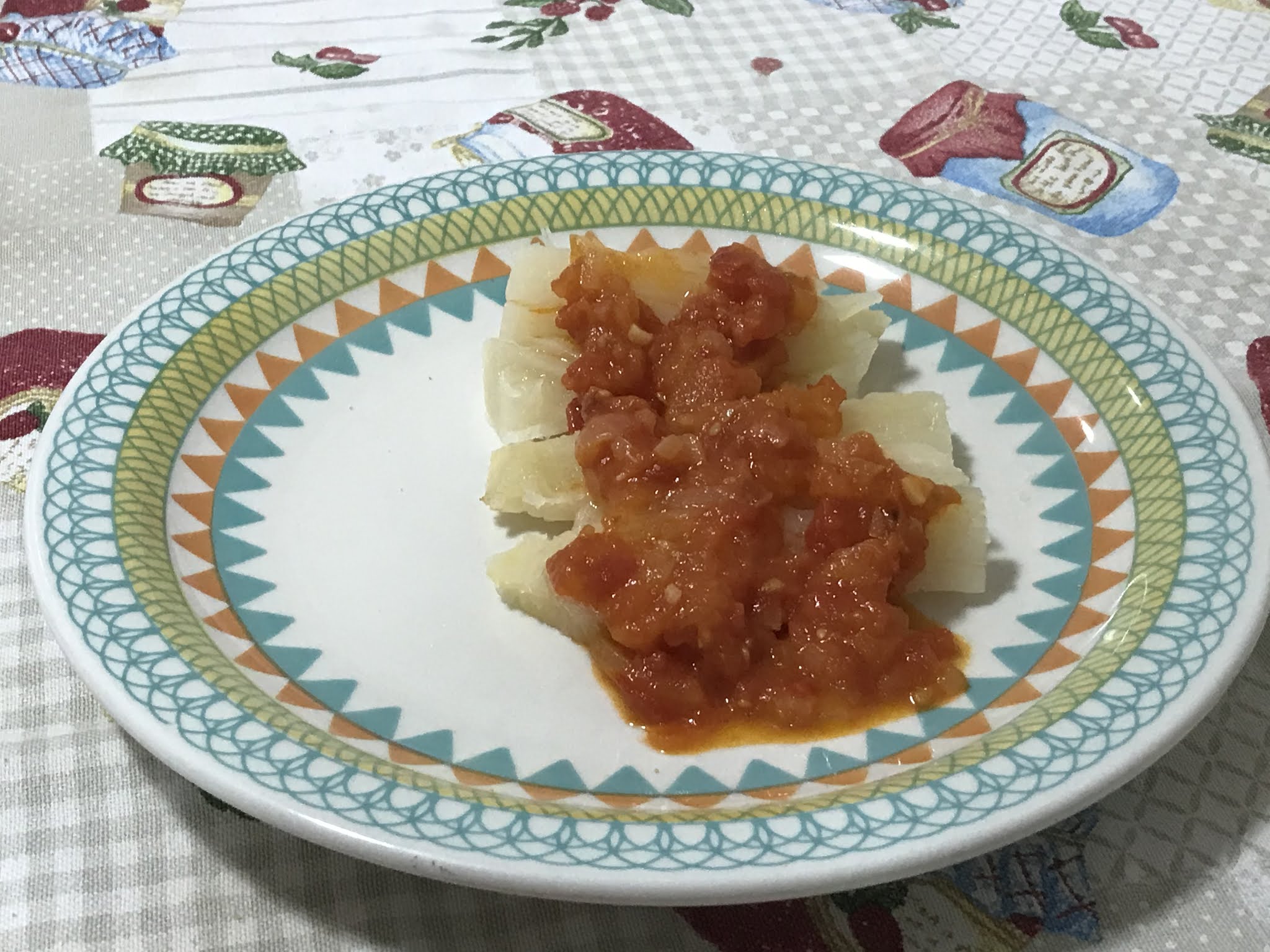
Unlike the potato, though, yuca must be thoroughly cooked before it is used in recipes in general. Check out the video below to see how this is done:

 Video doesn't show up? Watch here. 
Images: Suelen Mapelli
Presentation/Editing: Diego Mandarino


Here is a list of food items made out of manioc and some pictures below:

- Cooked aipim
- Fried aipim chunks
- Yuca chips
- Matchstick/shoestring yuca fries
- Mashed cassava
- Toasted cassava flour
- Fried cassava flour (farofa)
- Tapioca
- Manioc bread
- Manioc cake
- Aipim "cuca" (Brazilian crumb cake loaf)


Photos: Diego Mandarino


sábado, 23 de janeiro de 2021

Milk sweet: a spread that tastes like home

Doce de leite. Such a Latin American flavor. It is one of the things I missed from home on the occasions I traveled overseas and was away for some time. 

In Spanish-speaking countries, it is called dulce de leche, just like in Portuguese: 'sweet of milk', 'milk sweet', or something of the sort. Since there is apparently no specific term in English, I will keep using doce de leite. 

It is basically a thick, creamy brown spread. It is delicious on a slice of bread, especially if you mix it with milk cream spread (nata), which is also commonly found in small containers on refrigerated supermarket shelves all over the country.

It tastes perfect on a slice of bread

Doce de leite is a great filling, too. It is the heart of the unrivaled South American alfajor, a most traditional confection in Argentina and Uruguay. It is the soul of the Brazilian churros, a deep-fried, tube-like dough.

This very sweet brown cream also goes heavenly with cheese; in the Brazilian state of Minas Gerais, doce de leite served with Minas cheese is a classic. The sweet commonly found there is of a lighter brown color than the one typically made here in Southern Brazil and neighboring countries.

Speaking of Minas Gerais, another specialty of theirs that makes a perfect companion to milk sweet is pão de queijo, or cheese bread. Pão de queijo is an authentic Brazilian dainty on its own, by the way, popularly accompanied by a cup of coffee in city cafes, bus stations, roadside gas stations and diners, and airports throughout the country.

In the pictures below, the doce de leite, Minas cheese and cheese bread were all made in the state of Rio Grande do Sul:

Minas Cheese and Milk Sweet: what a couple!

Pão de queijo and doce de leite, another scrumptious duo.

Oh, how I miss those good old days when I was a child in the 90's and it was still possible to find doce de leite and nata in bulk in supermarkets' display counters to be sold by weight. You could ask for a certain quantity and the attendant behind the counter would start collecting spoons of the desired substance, gradually filling a plastic container that stood on a scale until the approximate requested amount was reached. It seems to me that these foods tasted better that way. They don't sell them like that anymore due to sanitary regulations. 

The recipe for this brown manjar is quite simple; the making of it, not so much. The sweet is obtained by slowly heating milk with sugar. One has to be careful not to let it burn, stirring and stirring. According to my mother-in-law's account, who had the experience of preparing it at home in the past, the process takes hours and the resulting volume of sweet is a great deal smaller than the initial volume of milk. 

In Brazil, you can usually find jars containing doce de leite in supermarkets. The best brands are usually from Uruguay. When my wife and I traveled there last year, a little more than a month before the pandemic, we were surprised by the variety of products made with, or flavored like, doce de leite, including ice creams, yogurts and carton drinks.

You can also find it in small plastic bags here in Brazil. This is popular with kids, who bite these bags open and slurp its scrummy content. My wife got one in a food basket she was gifted by a group of students last year, which reminded her of childhood.

Do you feel like biting this bag open?

In South America, I can assure you that doce de leite is a superior sweet and a flavor to try, and one to never forget. 


quinta-feira, 7 de janeiro de 2021

Pitanga - the Surinam Cherry

This week I saw on Facebook a post from Teacher Fábio Emerim, who teaches English as a foreign language in Brazil, about how to say some fruits in English. In the list he mentioned pitanga: I learned that it's called "Surinam cherry" in English. 

The mention of this tiny round, somewhat mandarin-shaped (because of the apparent wedges it has), bright orangish-red cherry made me smile and brought back sweet and aromatic childhood memories for me. In my mind, I saw myself once again perched on a Surinam cherry tree (pitangueira) branch above the sandy gray soil beneath, in a coastal month of February, plucking off these juicy scarlet ornaments for my own summer delight. A genuine Brazilian flavor dream.

                                                Image by Gustavo Torres from Pixabay

Pitanga, or Surinam cherry, is undoubtedly my favorite fruit. It's sweet, but not much; it's a bit acid, but only a tiny little and by no means does it make your lips feel prickly; it's succulent; its stones are smooth and slightly soft, not causing any trouble and even agreeable to chew; and it gives off a pleasant and unique, sweet-sharp scent. 

Doing a little research on Google, I found out that pitanga can also be translated into English as "Brazilian cherry", though this might not be a precise term. It is apparently used to refer to a range of species, one of them being  jabuticaba, a black cherry that grows on the trunk of a tree (another good one to try!).

Anyhow, it makes me feel good that my preferred fruit is one of my own homeland. I don't really know why the Surinam cherry, as well as other native species, does not have a commercial value. Maybe it's because its quality depends on specific soil traits? That's pure guessing, though. I once tried a pitanga on my university campus in Porto Alegre; much to my disappointment, it had a very weak flavor and no aroma at all...

Those ones from my childhood memories, however, in a native tree garden near the Atlantic seashore, were the real deal. And that very tree I am perching on in my thoughts still bears fruit to this day in real life. My uncle and aunt (piblings?) even make jam out of its cherries. (But I would rather eat them fresh from the tree!). 

But, oh... how I wish there were Surinam cherry ice creams to be found anywhere around... and popsicles, ice pops, candies, juice, soft drinks, jams, and all the other treats they make out of fruits. Unfortunately, this is not the case in Brazil, whose people seem to sometimes turn their backs on what their homeland's nature has to offer. Or maybe that's just my cherry resentment speaking 😁

So, if you ever come across pitangas, the tiny cherries that you can see in the picture above, don't hesitate: try them. If you live in Brazil or if you ever come to Brazil, maybe you will be lucky enough to find a tree. It's not like it can be found anywhere, but it's not rare either: it is a legit Atlantic Forest element. So much so that some specialized gardening shops in the region sell Surinam cherry saplings; my mother-in-law even bought one a few months ago.

In case you have been wondering what the other fruits I like best are (you were probably not wondering), apart from the East South American delicacy I just described above, here is my personal top 10 fruit ranking:

1 - Pitanga (Surinam cherry)
2 - Maracujá (passion fruit)
3 - Pineapple
4 - Kiwifruit
5 - Melon
6 - Strawberry
7 - Grape
8 - Mango
9 - Banana
10 - Mandarin

What are your top 10?